Beachfront Homes for Sale A Deep Dive into Coastal Living & Real Estate Value
The dream of owning a home overlooking the ocean, with waves lapping at your doorstep, sunrise views over the sea, and the salty breeze in the air, is a powerful lure. Beachfront homes are more than mere real estate; they embody a lifestyle. But with that allurcomesme unique considerations. This guide explores in depth the world of beachfront homes for sale-what they are, their advantages and trade‑offs, real examples, and when and how they can make sense for different buyers.
What Defines a Beachfront Home?
Beachfront homes are properties directly adjacent to the shoreline, with no intervening road, park, or public land between the house and the beach. In many markets, “beachfront” means you can walk straight from your property onto the sand or at least access it with minimal obstruction.
Distinguishing Beachfront vs. Ocean View vs. Waterfront
A key nuance is that not all “ocean view” properties are beachfront. An ocean view home may be located up on a bluff, behind a road, or in a development that simply offers sightlines to the water. Meanwhile, waterfront is a broader term encompassing any property touching a waterbody, such as lakes, rivers, canals, etc. Thus, beachfront is a subset of waterfront with very specific adjacency and exposure to the ocean.
Because of this, beachfront real estate tends to command a premium. Buyers pay not only for the land and structure, but for the exclusivity of proximity, the views, and the emotional appeal of being on the shore.
Key Considerations in Beachfront Home Markets
Location and Coastal Dynamics
Beachfront markets vary greatly depending on geography, climate, and coastal dynamics. Some shores are relatively stable, with minimal erosion and mild storms; others are dynamic, with shifting sands, seasonal tides, storm surges, and coastal erosion pressures. Before buying, a prospective owner must understand:
-
Erosion and setback rules: Many coastal jurisdictions enforce buffer zones or setbacks that limit how close you can build or maintain structures.
-
Flood risk and storm damage: Insurance, structural reinforcement, and local zoning influence how safe the property is in heavy weather.
-
Public access and rights: In some regions, the public has rights to cross or use parts of the beach, which can affect privacy and maintenance.
Market Cycles & Demand Drivers
Beachfront real estate is especially sensitive to tourism patterns, climate trends (e.g., sea-level rise), and economic cycles. In times of economic prosperity, demand for premium coastal properties tends to rise sharply. Conversely, during downturns, these properties can be harder to sell due to their high price point and maintenance burdens.
Factors influencing demand include:
-
Vacation rentals and second-home market dynamics
-
Desire for lifestyle and wellness, especially among retirees or remote workers
-
Scarcity: shoreline lots are limited and cannot be newly created (except by land reclamation)
-
Regulatory changes: coastal protections, zoning changes, or environmental rules can significantly influence property values
Advantages & Benefits of Owning a Beachfront Home
Beachfront homes bring a range of tangible and intangible benefits, which often justify their premium cost for the right buyer. Below are the enefits, structured into lifestyle, financial, and strategic categories.
Lifestyle & Emotional Benefits
Owning a beachfront home offers daily immersion in coastal ambiance: the sound of waves, panoramic sunrises and sunsets, direct beach access, and a strong sense of tranquility. For many, this translates into:
-
Enhanced well‑being and mental health: proximity to nature and water has documented positive effects on mood and stress.
-
Personal enjoyment: direct access to beach recreation, water sports, and the social prestige of a desirable address.
-
Flexible use: many owners split time between a primary residence and the beachfront home, making it a retreat or vacation base.
Financial & Investment Advantages
While expensive, beachfront properties can offer strategic advantages:
-
Appreciation potential: Due to scarcity and desirability, well‑located beachfront properties often outperform inland homes over the long term.
-
Income potential: if local regulations permit, the owner may lease the property as a high-end vacation rental, generating significant seasonal revenue.
-
Inflation hedge: hard assets in premium locations (land plus structure) tend to retain value better than speculative or non-land assets during inflationary periods.
Strategic & Portfolio Value
From a broader investment perspective:
-
Diversification: beachfront real estate adds a unique asset class to a real estate portfolio, offering exposure to hospitality, tourism, and experiential real estate.
-
Prestige and leverage: luxury beachfront homes often lend themselves to higher margins and branding opportunities (e.g, “coastal retreat” offerings).
-
Legacy assets: for families, beachfront homes can be generational holdings and serve as legacy properties passed down.
Real‑World Examples of Beachfront Homes & Their Relevance
To ground these advantages and challenges in real life, here are three real-world examples of notable beachfront homes or developments, with details and relevance to our discussion.
1. Beachfront Villa in Malibu, California
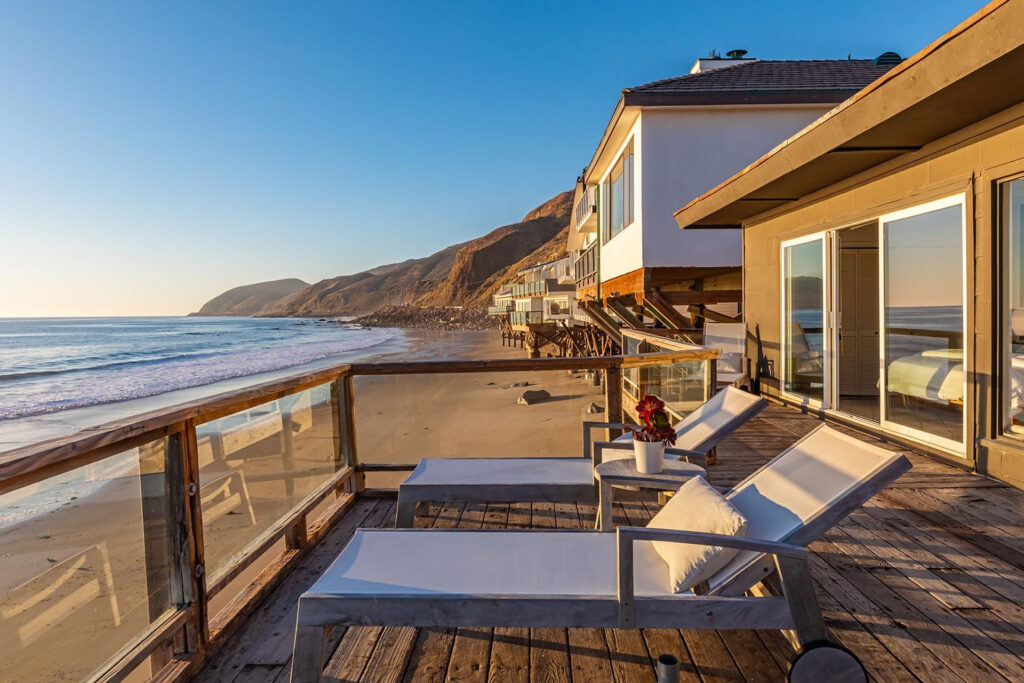
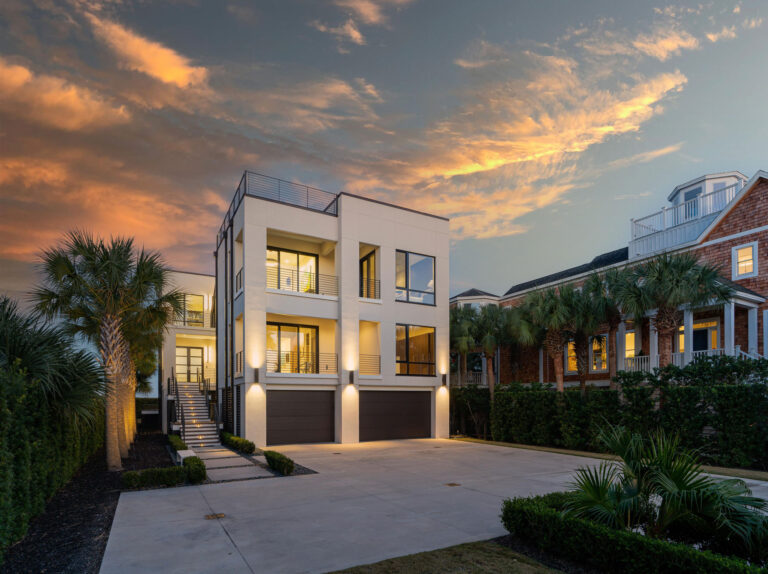
This expansive beachfront villa features floor-to-ceiling windows, private stair access to the sand, and panoramic Pacific views. It showcases the classic advantages of a premium beachfront property: exclusivity, design integration with nature, high-end finishes, and strong demand from affluent buyers. Despite its allure, this property faces regulatory constraints around coastal setbacks, high insurance costs, and maintenance due to salt, wind, and potential fire hazards.
Relevance: It demonstrates how luxury beachfront homes integrate design, location, prestige- but also how their costs and risks scale with their ambition.
2. High-Rise Beachfront Condominiums
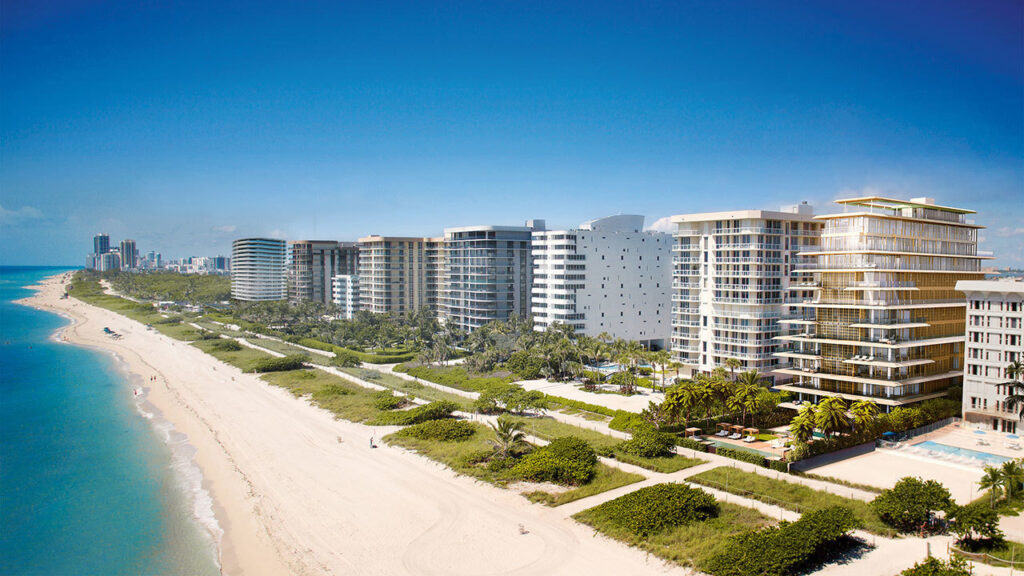
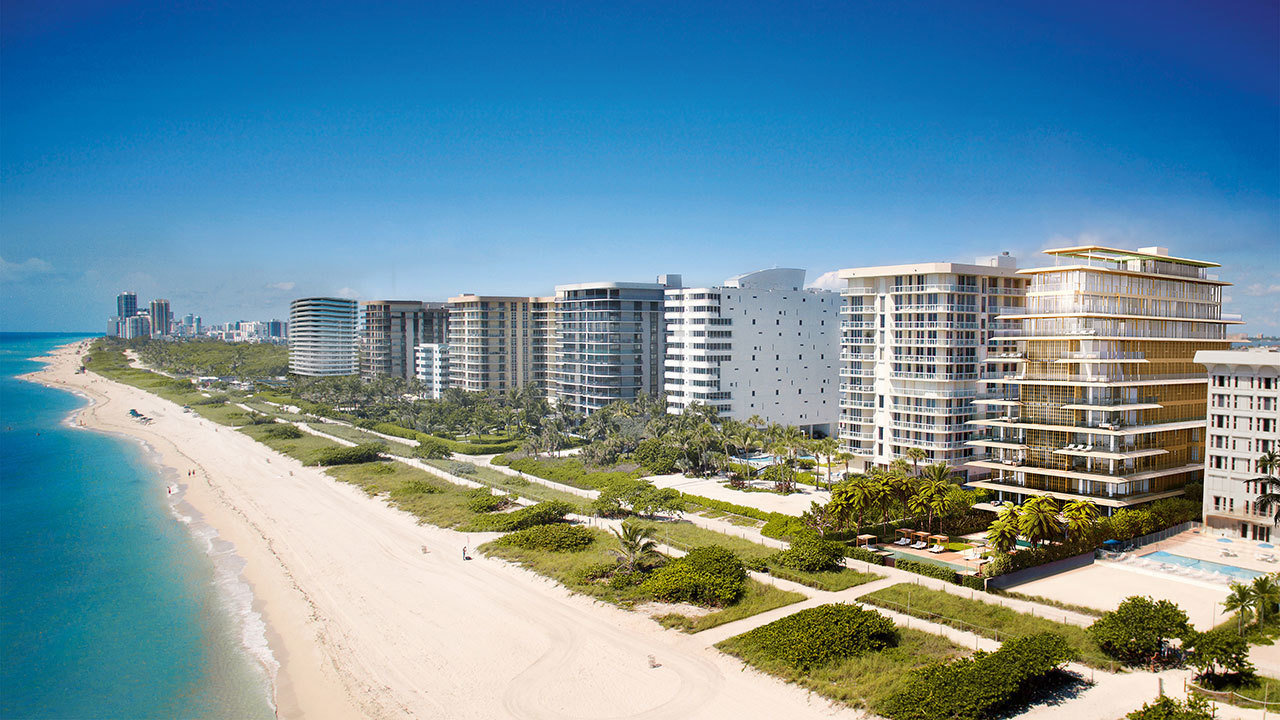
In many tourist-heavy coastal cities, developers build high-rise beachfront condos rather than standalone homes. These units offer many of the same perks: sea views, beach access, resort-style amenities, and relatively lower maintenance responsibilities compared to a ground-up house. However, they often involve shared ownership structures (condo associations), rules on rental usage, and HOA fees.
Relevance: They illustrate how beachfront living can be packaged in multi-unit form, lowering the barrier to entry while retaining appeal.
3. Tropical Beachfront Bungalow Development in Southeast Asia

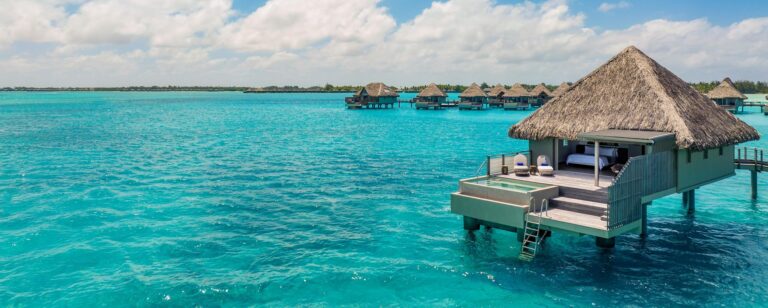
Smaller-scale beachfront homes or bungalows in tropical destinations (like Bali, Phuket, or Costa Rica) appeal to buyers seeking a more intimate, nature‑oriented lifestyle. Many of these are located in gated coastal enclaves with protections against erosion and accessory structures for guest stays. These often come with trade-offs: tropical storms, access infrastructure, and regulatory certainty (foreign ownership laws, coastal rights).
Relevance: This example shows how lower-scale beachfront properties operate in developing or tourist markets, with both opportunities and caveats distinct from ultra-luxury markets.
Practical Use Cases & Problems Solved by Beachfront Homes
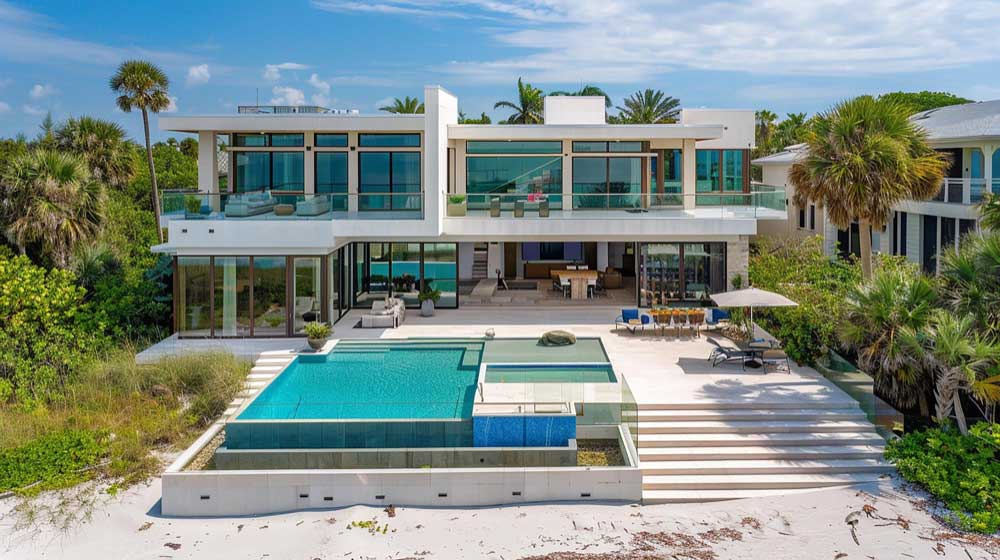
Owning a beachfront home isn’t purely aspirational. Many real buyers and investors use these properties in concrete ways. Here are use cases and how the beachfront concept addresses specific problems.
Use Case 1: Vacation Home + Rental Income.
Problem: An individual or family wants a getaway spot but also wants to monetize the property when unused.
Solution: A beachfront home rented during peak weeks can generate meaningful revenue. Because beachfront is a premium amenity, nightly rates are far higher than typical rentals. The adjacency to each view and exclusivity command a premium multiplier. The income helps offset holding costs (mortgage, insurance, maintenance).
This use case works best when the owner is located near the property or has a management partner, and in a jurisdiction where short-term rentals are allowed and regulated.
Use Case 2: Primary Residence with Escape Features
Problem: Someone seeking a lifestyle upgrade, possibly working remotely, wants daily access to a coastal environment.
Solution: Buying a beachfront home as their main residence gives them the benefits of coastal living, direct beach access, natural light, and wellness benefits. The home serves both as a residence and a retreat, minimizing the need for frequent travel.
Use Case 3: Long-Term Investment & Portfolio Diversification
Problem: A real estate investor seeks assets that offer both yield and capital appreciation, ideally uncorrelated with typical urban realtors.
Solution: Beachfront real estate can act as an alternative real asset, appreciating over time due to scarcity, climate-driven demand, and desirability. A diversified real estate portfolio provides exposure to coastal markets and hospitality trends.
Use Case 4: Legacy Property, Family Retreat, or Estate Planning
Problem: A family wants to preserve a generational asset that combines emotional and financial value.
Solution: A beachfront home offers both sentimental and market value, often held long-term and passed down. Even if the home is rarely used, its location and uniqueness tend to preserve or escalate value over decades, assuming proper maintenance and proactivity in addressing risks (coastal erosion, regulation, climate change).
Challenges & Risks to Consider (and Mitigation Approaches)
No asset is without drawbacks. Beachfront properties carry specific risks — knowing and planning for them is critical.
Climate & Environmental Risks
-
Erosion and land loss: Coastal lines shift. Mitigate by studying historical shoreline changes and selecting properties with stable terrain or engineered protection.
-
Storm damage and flooding: Use elevated foundations, flood-resistant construction, and robust insurance.
-
Salt, humidity, and corrosion: Maintenance costs are high — use materials resistant to corrosion (stainless steel, marine-grade metals) and budget for ongoing upkeep.
Regulatory, Zoning & Legal Restrictions
-
Setback or retreat laws: Some jurisdictions require structures to be moved inland over time.
-
Public access laws: The public may have rights over parts of the beach, affecting fencing or privacy.
-
Foreign ownership rules: In many coastal countries, foreign buyers face restrictions on shoreline properties.
-
Rental restrictions: Local ordinances may limit or prohibit short-term rentals, affecting income use cases.
Market & Liquidity Risks
-
High price volatility: Luxury coastal markets are more volatile, and during downturns, may suffer steep discounts.
-
Limited buyer pool: Fewer buyers can afford or desire beachfront, reducing liquidity compared to inland homes.
-
High carrying costs: Insurance, property taxes, maintenance, and utilities tend to be higher.
Mitigations include due diligence, conservative financial modeling, insurance strategies, and building a resilient, diversified portfolio rather than overexposure to any single high-risk property.
How Technology Enhances Beachfront Homes (Smart Coastal Living)
Modern technology plays a pivotal role in amplifying the comfort, utility, and resilience of beachfront homes. Below are key domains and innovations that owners can adopt.
Smart Home & Automation
-
Climate control and dehumidification: Automated systems can regulate humidity and temperature to reduce corrosion and mold risks in humid coastal climates.
-
Smart windows and shading: Automated shades can protect interiors from harsh sun or storms, thereby preserving interiors and reducing cooling loads.
-
Remote monitoring & security: Cameras, sensors, and alarm systems provide peace of mind when the home is empty for periods.
-
Energy management: Solar integration, battery storage, and smart-grid compatibility help optimize energy usage, especially when grid reliability is variable near remote shores.
Structural & Material Technology
-
Corrosion-resistant materials: Use of marine-grade stainless steel, fiber-reinforced polymers (FRP), and advanced composites increases longevity in salty, humid environments.
-
Flood-resilient design: Technologies such as breakaway walls, elevated pilings, and modular structural elements allow buildings to better endure storm surge without catastrophic loss.
-
Smart glazing & coatings: Glass that can dynamically tint or coatings that repel salt and moisture help maintain clarity and reduce cleaning burden.
-
Monitoring & predictive sensors: Embedded sensors in foundations or seawalls can detect movement, moisture intrusion, or wear, enabling early maintenance and avoiding catastrophic damage.
The synergy between beachfront living and technology can turn what would normally be liabilities into manageable or even value-enhancing features. Smart systems reduce maintenance burdens, prolong structural health, and ensure comfort in challenging environments.
Practical Advice & Checklist for Prospective Buyers
When evaluating beachfront homes for sale, consider the following checklist to protect your investment and lifestyle:
-
Historical shoreline data: Request government or geological studies showing changes in beach lines over decades.
-
Erosion control and regulation review: Understand local codes, buffer zones, and whether any retreat rules apply.
-
Flood & storm insurance & cost: Obtain full quotes for insurance, including wind, flood, and storm surge coverage.
-
Structural inspection for salt damage: Ensure the home has materials and construction suited for coastal exposures.
-
Access and infrastructure: Confirm access during storms, road maintenance, and utilities (power, water, sewage) reliability.
-
Use restrictions & rental permissions: Check whether local codes allow short-term rentals, guest houses, or accessory structures.
-
Resale demand & comparable sales: Analyze recent sales in the area to assess liquidity and price trends.
-
Energy & resilience systems: Confirm presence or potential for solar, generator backup, flood-resilient systems.
-
Ownership and legal title issues: Clear deed, coastal easements, tidal rights, and public access rights must be vetted.
-
Maintenance and operational budgeting: Estimate ongoing costs (salt cleanup, mechanical systems, landscaping) conservatively.
Using this checklist, a buyer can more confidently weigh whether a beachfront home aligns with their lifestyle, risk tolerance, and financial goals.
Frequently Asked Questions (FAQ)
Q1: How much more expensive is a beachfront home compared to an inland property?
The premium for beachfront properties varies widely by location, but it’s common for them to sell at 30% to 100% or more above comparable inland homes in the same area. The premium comes from scarcity, view, access, and emotional appeal. However, those premiums must be justified by buyer perception, ease of resale, and the capacity to maintain the unique property burdens.
Q2: Are beachfront homes a good investment in the face of climate change and sea-level rise?
Beachfront homes can still be a good long-term investment, but the risk from sea-level rise and climate volatility must be accounted for. Buyers should favor properties with resilient design, higher elevation, engineered protection, and jurisdictions that proactively plan for coastal adaptation. Diversification and conservative valuation are key.
Q3: Can I rent out my beachfront home as a vacation rental, and is that profitable?
Yes, in many markets, beachfront homes generate premium rental income—particularly in high-demand tourist seasons. Profitability depends on occupancy rates, local regulations, operational costs, and property positioning. For many owners, rental revenue helps offset ownership costs like maintenance and insurance, but it’s crucial to run realistic cash flow models accounting for vacancy periods, repairs, and regulatory compliance.